


The cellar, where wine comes to life
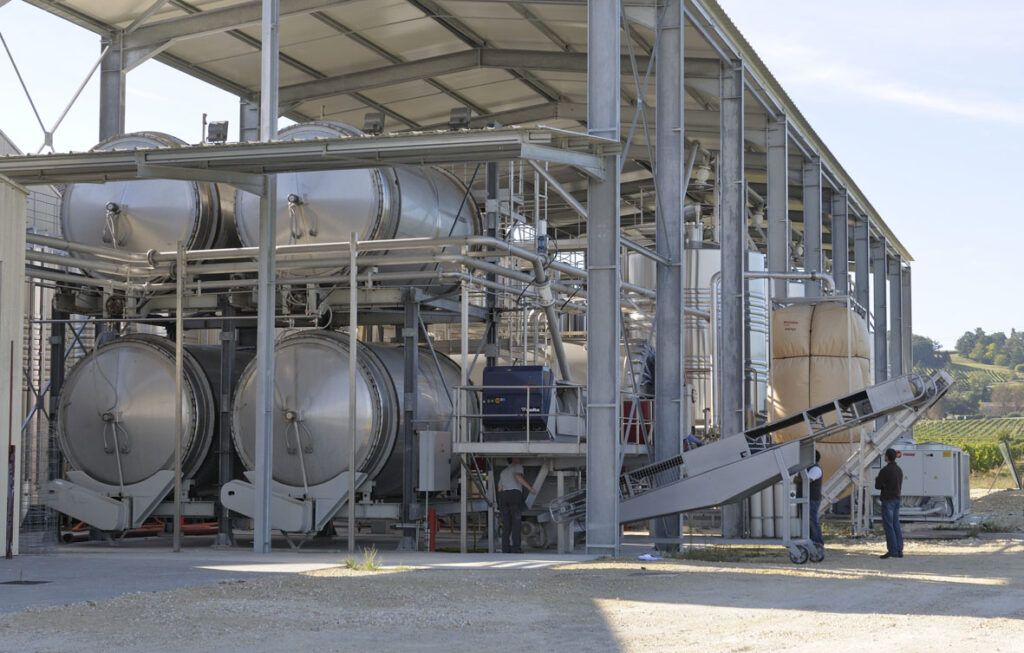
At the Cooperative Winery, our cellar and winemaking facilities are tailored to the diversity of our range, enabling us to craft our wines with precision: dry white Bergerac, rosé, red, Côtes de Bergerac (sweet and red) and the iconic sweet wines of Monbazillac.
Some figures about our cellar
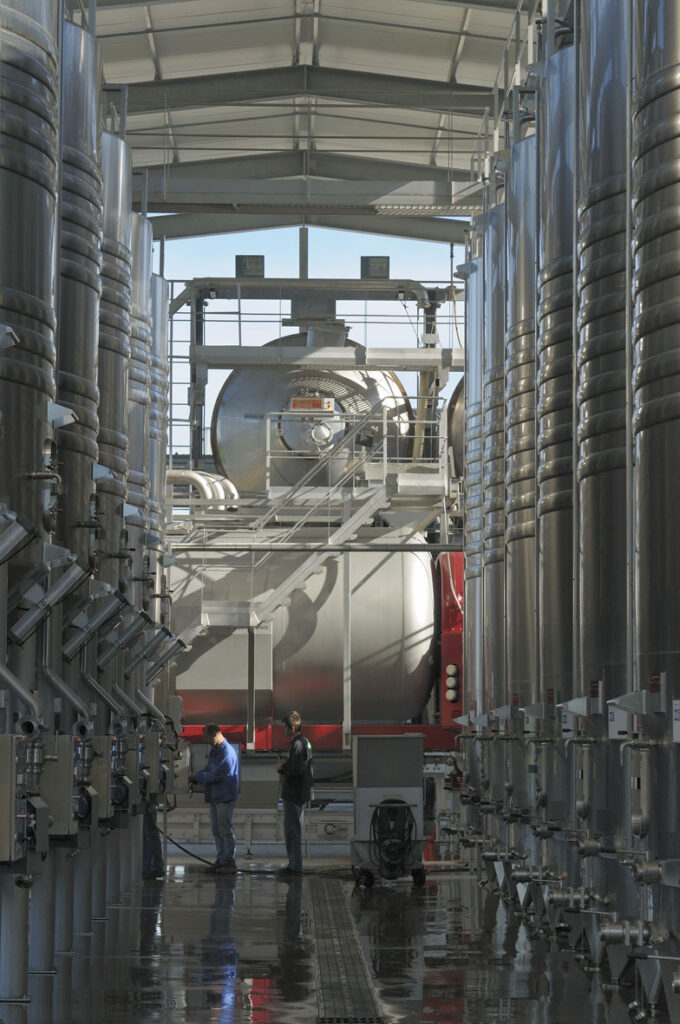
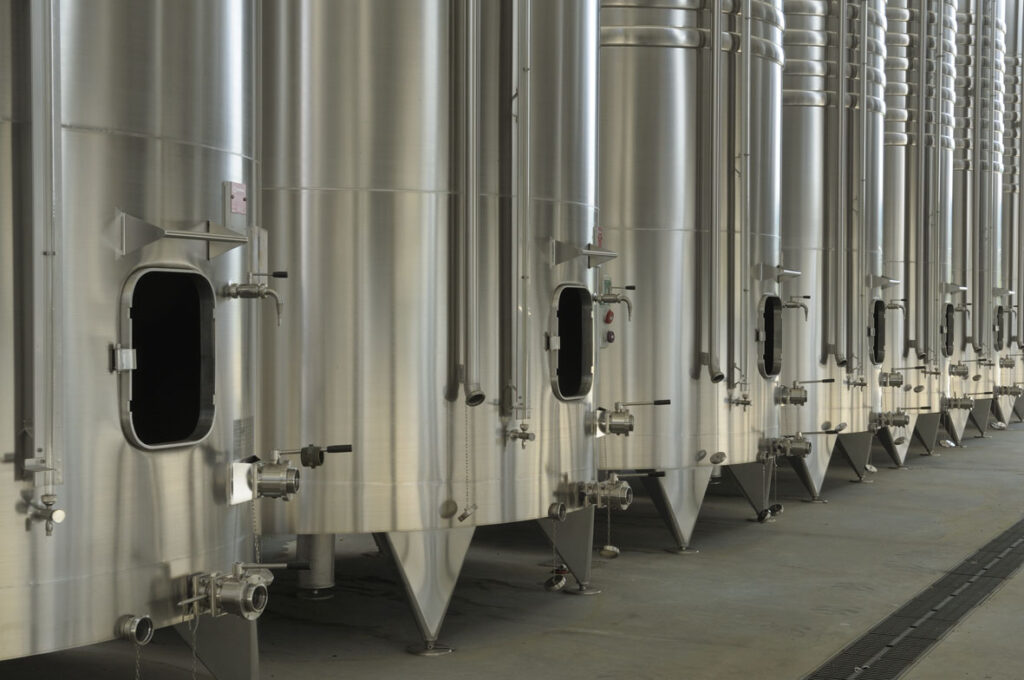
The cooperative’s cellar boasts a large fleet of vats to support every stage of winemaking.
- 77 temperature-controlled stainless steel tanks, ideal for precise fermentation control
- 155 concrete vats, which offer excellent thermal inertia
- 78,000 hectolitres of total storage capacity. This represents approximately 7.8 million litres of wine, equivalent to over 10 million bottles.
- 1 cellar master and 4 cellar attendants
From vine to cellar:
the stages of winemaking
Wine-making requires precision, patience and specialist expertise. Every stage, from harvesting the grapes to fermentation, is carried out with care to preserve the full aromatic richness of the grapes. Throughout this process, tasting is essential. At each stage, sensory analysis of the wine in production helps to determine the best technical choices for creating fine wines.
Transport: preserving the quality of the grapes
The harvest is a decisive moment in the production of every wine, and particularly that of Monbazillac. Hand-picking, which is a mandatory requirement in the specifications, helps to preserve the full aromatic quality of the grapes. This has led us to adopt technical approaches such as harvesting in half-day sessions, bringing in small quantities at a time, and using a grape conveyor within the winery, all with the aim of preserving the integrity of the bunches as much as possible. To maintain the quality of the grapes, it is also essential that the time between harvest and arrival at the winery is as short as possible.
Pressing: gently extracting the juice
Once the grapes arrive at the winery, they are pressed using a pneumatic press. This type of pressing is particularly gentle: it involves inflating an air membrane inside the press to apply gradual pressure to the bunches.
In around two and a half hours, this process extracts the juice from the grapes whilst preserving their structure. This method is essential for preserving the aromatic finesse of Monbazillac.
At this stage, vigilance is key: oxidation of the juice—that is, contact with oxygen—must be avoided as much as possible in order to preserve the purity of the aromas and the freshness of the future wine.
Fermentation: the process in the vats
After pressing, the juice is transferred to the vats, where fermentation begins. During this crucial stage, the sugars naturally present in the juice are converted into alcohol through the action of yeasts. As they ferment, the yeasts produce carbon dioxide and generate heat, whilst developing the aromas. Our vats are temperature-controlled to regulate the temperature during fermentation, ensuring a slow and controlled process that preserves all the aromatic richness of Monbazillac.
Ageing: a labour of patience
Depending on the quality of the juice and the type of wine we wish to produce, ageing can take place in vats or in barrels. We have chosen to age all our white wines and our rosé on fine lees to give them greater roundness and depth of flavour.
Our finest wines spend between 6 and 18 months in oak barrels to develop tannins that enhance their length and roundness, and to acquire woody aromas that bring a richer and more complex aromatic balance.
To find out more about our winery, our expertise and our wines, come and discover our permanent exhibition ‘Noble Vin’ on display at Château de Monbazillac. Our wines will hold no more secrets for you!